
It’s all over the place…we want to “matter”. In this time of change, we are questioning why and how we matter to this world. But what does it really mean? We will dissect it all together…the what, the why, and the how.
What it means ‘to matter’

It’s all over the place…we want to “matter”. In this time of change, we are questioning why and how we matter to this world. But what does it really mean? We will dissect it all together…the what, the why, and the how.

A few months ago, I was invited to sit down with Angie Gitner, the Girl with the Purple hair on her podcast “the girl with the purple hair talks business”. We had a delightful time talking about the concept of entrepreneurship, learning the Essential Elements of Life, and AFDA.
It was released yesterday and I am pleased to share it here for your listening pleasure 🙂
I would love to hear your questions and/or comments. The beginning I felt a bit shaky, but over time it became a wonderful experience; one I would definitely partake in again if given the chance.

Belief: a state or habit of mind in which trust, or confidence is placed in some person or thing. Below are some of the main tenets of the Essential Elements of Life – common sense ideas and concepts necessary for living a fulfilling life. What are your opinions on the truths that are below?
We MUST discover and enhance our relationship with Change, or we will forever be anxious or depressed.
We can work to remove the belief that one cannot change or manage change with ease.

Expectations will happen no matter what, but should be managed carefully. Standards are helpful, but held too tightly aways cause pain.
Finding the source of expectations helps to provide a place to decide whether to live them, reject them, or correct them.
Belief in unrealistic expectations causes grief that often leaks into one’s identity.
Decisions will make themselves if you let them, but often when it is too late and not in one’s favor. It’s best to give time and thought to a decision to correctly set one’s sail. Our souls know the decisions we need to make, it’s up to us to listen as all of our answers lie within. Make decisions that help your purpose manifest.

It doesn’t matter how one feels about emotions, they are not going away and therefore must be understood. We CAN find ways to diffuse, process, and release emotions effectively. Coping mechanisms help, but realize used too much can become addictions themselves, so moderation is key. Use them wisely to continue forward on your journey. Empathic Healing sessions can help.



Be Curious: It’s the only way to start the cycle of knowing oneself. Curiosity about the world turns to understanding others, thereby clearing a path to understand oneself.
Curiosity didn’t kill the cat, it just helped it transition from one type of life to another.

Culture is a fancy way for defining what we feel is “normal”. Normal is different all around the world, and even inside the bounds of nations.
Defining one’s own culture helps us find our place in the world. Being curious about others culture helps create communal bonds. Understanding “Why” helps people create a space of trust and that can help society prosper.

Humans are fallible so focus not on creating heroes, but on emulation of the attributes that made them heroes in the first place.


All visions do not have to manifest, or even happen exactly as planned, but we never get anywhere without first having one.

A rhythmic balance of yin and yang energy full of respect, sacrifice, and love creates the tightest unions. Tiny secrets don’t hurt either, stay spicy.




A thriving community is created by a balance of personal responsibility and collectivity. Groups will form boundaries based upon shared cultures, but they should be more like the division between water and air than made of bricks and stones.

What do YOU believe?

What does it mean to live a life of balance?
When defining something, it can help to first compare it with its opposite. Luckily, our current environment is so out of balance that it is flush with opportunities for comparison. Everywhere you look there is dissonance, chaos and tumult. The weather is erratic, our Congress is comparable to Kindergarteners that need a nap, and politics has turned into a new religion. Many people are struggling with crime and homelessness, yet prosperity is at an all-time high. We celebrate raunch, aggression and those least equipped to do anything except make money and convince others do try to do the same.
This level of imbalance is unnatural. It has grown exponentially as humans have learned the technology to shield themselves from dealing with reality. Our fear of change has driven us to a desire for a plastic world, one where things stay the same or at least give us the veneer of sameness and comfort. We have essentially become the dad from the Lego movie with our gallons of super glue to paste things into place forever.
This environment, because it is unnatural, hurts our souls and makes us weaker every day. Humans are struggling to survive, searching for safety and seeking belonging, with little to show for their attempt. We all feel something is wrong, but feel powerless to stop it.

But take heart, for there is still hope. We do in fact have the power to bring our world back into balance. How? By starting with our own lives.
To bring ourselves back into balance we must:
Learning to balance our energy is one way we can start achieving these goals. This means discovering our own rhythm – the dance that happens within us as our energies interact. Our rhythm dictates who we are, who we want to be, and how we interact with the world. Once we understand our own rhythm, we can then learn to harmonize with the symphony of our family, our community and our world.

Understanding our rhythm, we are released from being tossed around aimlessly by our emotions and the emotions of others around us. Sounds great, right? Well, it does come with some work. In order to find one’s rhythm, we must work to understand ourselves.
Choosing the adventure of understanding one’s self is a mighty step towards creating a fulfilling existence. Once an Explorer has taken their first step, my job is to provide guidance along this journey to my Explorers by helping them learn the Essential Elements of Life.
One of the first lessons my Explorers learn is to define their natural energy. Learning our natural tendencies helps uncover the gaps between where we are and where we would like to be. Balancing energies is a solid place to start as it allows us to become more in tune with the dance between the push and pull of life, what triggers us and where we need to build resiliency.
Energy is separated into two types: Yin & Yang. These two energies (Yin & Yang) are the basis for everything in our universe. The constant push and pull between light and dark affects every level of our lives – from the global view to our individual existence. Today, we will take a deeper look at these two entities, their tendencies, their effect on our lives, and how to learn the rhythm they have coded within our souls so we can join the symphony and create more harmony.
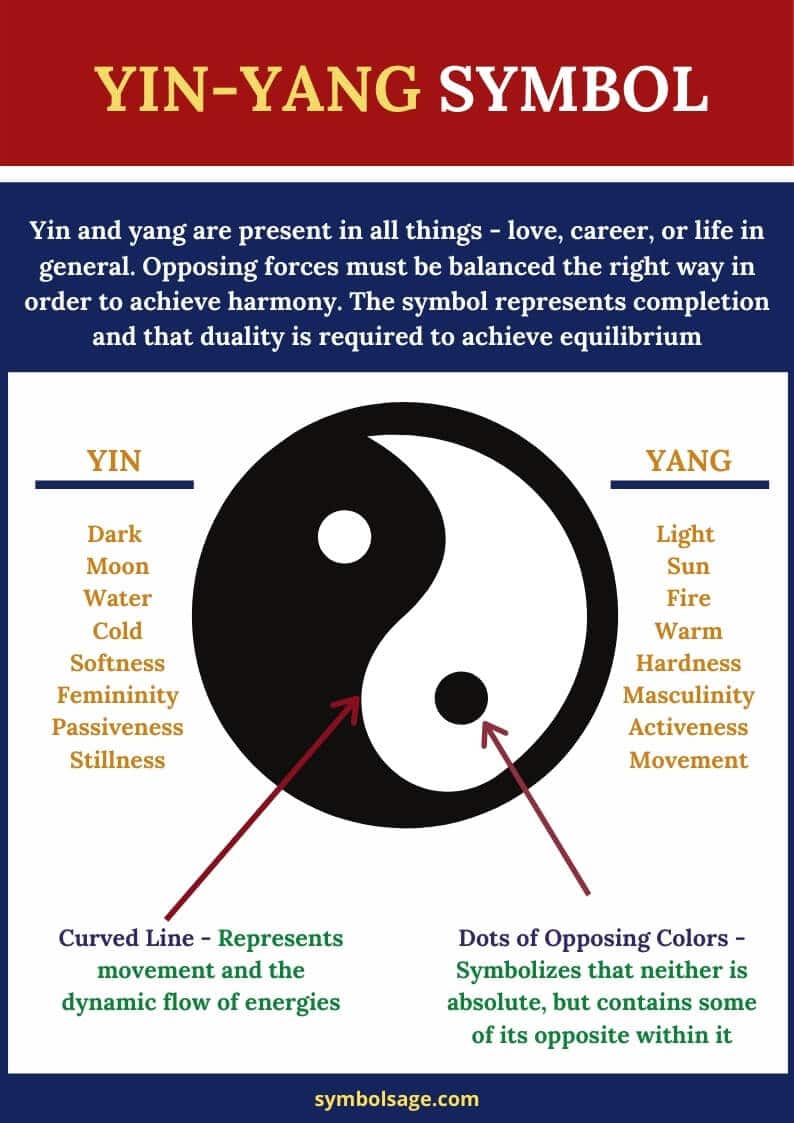
Yin and Yang are the words we use to define the conflicting energy spectrum that dictates much of our universe. Yin envelops the concepts of acceptance, rest and reassessment or strategy. Yang is the name of the force of chaos, the push for progress and the use of force to achieve our goals. Both are necessary to attain a life of balance, for what is life without progress and what is progress without acceptance?
Yin and Yang are complementary – both are exponentially more powerful when combined. All humans hold attributes of each within them, but we have different levels and capacities for the amount of each we can handle. Think of the little dot of each that exists in the sea of the other, sometimes the dot is large, sometimes it seems non-existent, but it is always there and can come into balance with practice.
Often, souls are born with a stronger understanding of one of these energies, but we can learn to appreciate, and acquire strength in the other throughout our lives. The natural tendency of our energy is not tied to a particular type of human, but there are generalities that have been categorized over time. Throughout history, much credence has been given to the idea that males tend have stronger Yang energy and females stronger Yin. While generally that tends to be true, we must understand that every person is able to show strong characteristics of one or the other regardless of their gender, sex or identification.
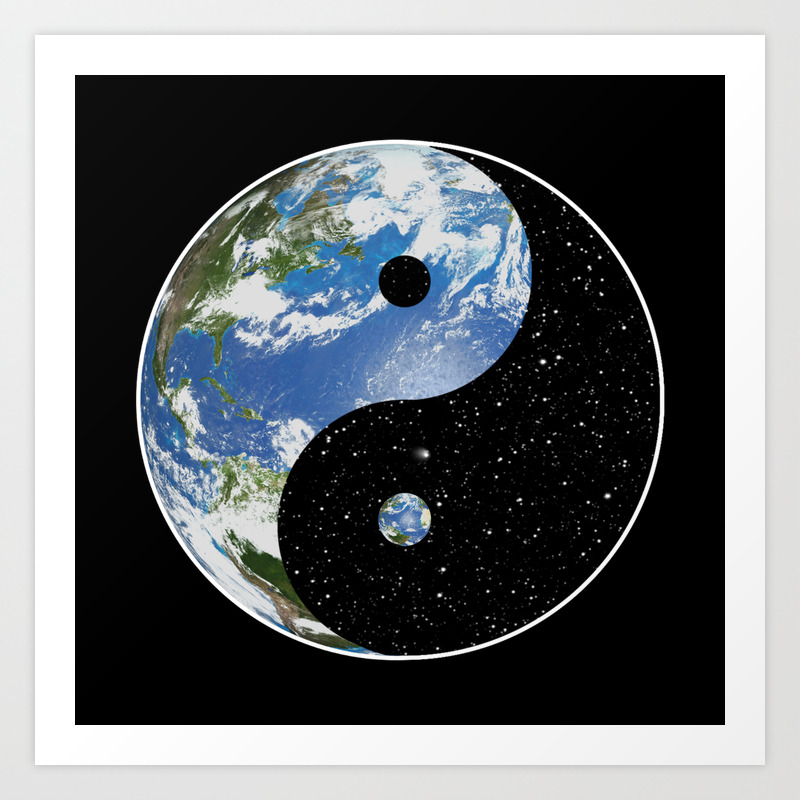
Both of these energies are important to life. These forces create a rhythm, or a dance, that needs to be balanced and allowed to flourish or their attributes grow too strong and become overbearing. If this happens, the weaker energy will morph into its ugliest self to take control from whichever has grown too powerful. When balanced they work together to strategically move us towards our soul’s desire.
The power of Yang stems from the ability to create change. Yang will always push, always yearn for more. Yang promotes bravery and risk-taking. It constantly yearns for progress and movement. The power of Yin stems from the ability to connect with others and plot the course. Yin is a place of peace when Yang has burnt out its energy and needs to rest, recharge and grow. When we are strong in Yin, we are able to see the big picture, reassess and plan how best to achieve the next level that Yang’s power will strive towards.
Yang energy lives along the plane of aggression and compassion. Aggression is using energy to push, control, and unleash the epitome of its strength. The sky seems to be the limit with Yang in control. When Yangs power wanes or gets out of control it requires a strong Yin to place it back on track. Compassion happens when Yang allows Yin to take control; more like a sovereign less like a dictator, a kind leader who submits to their people.
Notice, however, that Yang never fully submits; it only allows. They must be in control, or at least feel they are, as their Yin is small, and their Ego is fragile. Belief from others leads them to do their best work; change is only necessary with support.

Progress forces Yang towards Aggression when change is needed and this progress breeds competition, waking up other Yang and exacerbating the amount of Aggression in the environment. This aggression creates life, dismantles the old and allows for the new, but if left unchecked can create war, pain and suffering. Yang at its strongest creates a period of turbulence for Yin. When Yang is at its highest those strong in Yin feel crushed, stifled and can be easily hurt.
Yin lives along the plane of empathy and Control. It’s driven by a desire for connectedness and for peace. Yin must be shown compassion and respect in order to flower and when it does, our environment is a place of community, togetherness and love. Safety comes from having a structure that is agreeable to both energies, with Yang having the right amount of compassion to allow Yin’s empathy level to reach its potential.
Yin looks at the world as a community and is often concerned with emotional health and safety. Where Yang provides the energy Yin must create the rhythm and the structure that allows both to coexist. Often described as the dark with a more negative connotation, Yin is a place of rest, relaxation, learning, growth and planning. Yin is the coordinator of the partnership and must fully understand Yang’s capability and strength to create a place for both to thrive.
When Yang is in charge, Yin must either submit and allow or fight by using manipulation and strategy to contain the change. If Yin decides to struggle against Yang, there are a few things that must be decided. Namely: How much force can it control and for how long. Yin’s Yang is small, and in a fight of pure aggression and physical strength it will not win without losing itself as well (i.e., Armageddon).

In order to convince Yang to relent, Yin must use the tactics of Manipulation and Strategy. Manipulation comes when they feel hurt, overwhelmed, stressed or unnecessary and can manifest as spite.
Strategy comes from being allowed the space and time to see the bigger picture, to set goals, and to have a plan of action. If asked to plan when manifesting spite, Yin will create a structure that blocks out Yang as much as possible; if shown respect and compassion, the strategy will have an empathetic intent.

Let’s head through a short analogy to see how this works out in real life. I am guessing that most everyone has attempted to ride a seesaw (teeter totter?) when they were young, so hopefully this will make sense. The seesaw was not always the easiest toy on the playground, but if done right, it was one of the most fun. Riding a teeter totter (seesaw) was both scary and exhilaratingly ticklish, it took concentration but allowed for times of freedom and flight. The trick to this is that we must find a good partner.

To really make the seesaw work one must:
The flow of life is similar – we need to balance our energy, then balance energy with our partners, families and friends in order to create a harmonious life. Expand this to the community, state, country and global levels and one can easily see the amount of work that is needed can seem overwhelming. However, if every person worked on the first two layers, we could see a multitude of progress within our lifetimes towards an environment of shared harmony.
Why are we so out of balance? The answer is full of layers of complexity. One main reason is that our population is currently living out a life subliminally sold to us over the past generations. Subliminal messages are everywhere, in print, on our phones, in commercials, movies, television, school, our families – everywhere we look we are being molded often when we least realize.
This molding takes time, effort and a lot of money. Effort is needed to carefully mold a question, a meme, a picture, or a phrase into something we take in, to hit the depths of our psyche. Each message is meant to move us in some way, often with the desire for profit.
The messages pull us in directions that many of us wouldn’t freely choose and this creates a level of dissonance in our minds causing added stress, pain and fatigue. Even when we want to choose “the right thing” we often cannot due to this conditioning. Our Yang is stuck in aggressive mode and our Yin is working overtime to manipulate the masses.

How do we shake ourselves out of this control? Submission, vulnerability, compassion, acceptance, empathy, and accountability. All of these concepts can feel scary, especially when we exist in an environment that is primed to scrape our psyches clean for profit and gain. But these concepts are necessary if we want to live in a new world where we can balance our ever-growing desire for progress and change with our need for strategic rebalancing, lessons learned and rest.

While we work on exploring more of these concepts in our future sessions together, there are simple steps to take to start rewiring our minds back to a more balanced state:
Start Planning – Scary for some, so let’s start small. When you wake in the morning, plan an extra 5 minutes before you have to jump up to start your day. Visualize your morning from the time you will get out of bed to the time you start your work. Visualization helps us emotionally connect with what we are about to do and can help us be less forgetful. An added plus is that we will feel more accomplished when we achieved the visualized path in real life! Just this one simple thing can help our days get better. Practice this at different intervals to strengthen your strategic and emotional muscles.
Sacrifice a little so your environment can thrive – Determine small ways that you can give of yourself or accept something you had been ignoring or rejecting. Does your plant need some tender loving care? Spend a few extra minutes to learn how to meet its needs. Are you struggling to meet a deadline, but your little one wants your attention? Often, taking 2 minutes, even if it breaks your concentration, to give them your undivided attention will stave off the consistent nagging you will feel if you ignore their pleas. Submitting for a bit of our day, even when we are most busy, (unless life threatening of course), to provide another being with what they request can help strengthen bonds, and in the end make both ourselves and the other feel that they matter.
Try something different every other day – It could be waking up at a different time, eating something new, learning a new fact, exploring a new subject, anything that is very different from your normal routine. Adding a bit of change each day helps us strengthen our resiliency to deal with unexpected outcomes or ambiguity. Creating controlled changes, i.e., choosing the change, helps us explore our fear of change in a safe and more comfortable way. Doing it at different intervals lessens any anxiety we may feel, as we do not need to have to change constantly to see results.
Give yourself permission to suck – A friend shared this with me recently and it really spoke to me as I often need to add more Yang into my life. Yang is not afraid; it is fearless and in that majesty is the ability to try and try again. We need this fearlessness to resonate within us or we would never fully experience life. When first trying something, allow yourself to suck for a while. Rarely are we perfect on the first try, but our embarrassment at not attaining perfection the first time allows us to give up easily or never try in the first place. Embarrassment is not fun, but it is often fleeting, so take the burn and keep on trying.
Hopefully these suggestions will bring more balance into life and help on the path towards Enlightenment. This will be the last part of Scaling Maslow’s hierarchy for now, but we will pick this story next year as I release my book of the same name in 2022! I hope that each of you will find comfort, compassion and guidance from this excerpt and again from the book when it is released. 😊
Next time we will be taking our journey with Yin and Yang a step farther by discussing helpful concepts around creating a winning relationship. Take care until then. ☯
Sincerely,
Jessica
©Maven Source International, LLC 2021 – All Rights Reserved
Maybe you have experienced this before: You are in charge of a child (whether your own or someone else’s the experience is mostly the same) and while in your charge the little one falls and scrapes their knee, bumps their head, or has some other dust up that causes them pain.

It’s a caregivers dilemma what to do next. Time seems to freeze for a split second as everyone decides what to do: Do I move towards them to comfort them? Do I hold firm and hope they shake it off?
We are constantly told that the right way to act is to ignore the situation which in turn will help the little one realize it’s not a big deal and that emotions will not help heal them any faster. We have even seen instances of the opposite: when the care giver has acquiesced to emotion it seems to make the situation “worse” as the tears come out and the wailing starts. In cases where the child is ignored and not allowed an emotional reprieve, many times they do in fact “shake it off” and carry on.

Keep calm and carry on… first coined by the Brits during world war two. A good mantra for when times are tough, and something I think of often when faced with strife. But in every day situations, when our life is not really on the line, who is it that benefits from this “stiff upper lip” concept? The care giver who may not have time to thoroughly take care of the emotions? Or the child who may learn resilience?
The Compassion Conundrum
This is the “compassion conundrum” – how much of our time and our emotional capacity should we share with others? How does it help and how does it hurt? When is it necessary and when are we “enabling” someone? How do we keep sharing compassion when we are so overwhelmed just trying to live in our current environment?

I admit that often we do not have time to deal with every emotion that rises in our psyche each day, especially in today’s world, and I have a lot of respect for resilience. However, I also believe strongly that we need to better understand:
what compassion is, how it affects each of us, and how we can practice it to bring balance to our society.
What happens when someone shows compassion to another?
Being a human is difficult. We live in a state where our minds and our hearts are in constant battle. Logic and emotion are consistently at odds, fighting for control over our psyche, and this leads to a complicated existence. Balance is what we are after, but with many external sources of manipulation and confusion it is a very difficult tightrope to walk.
Compassion helps us release these pent up emotions. When another human shows compassion, what they are really doing is taking responsibility to shoulder another’s emotions for a time. They are saying “I know you are struggling, and I am feeling okay right now, so I can lighten your load by taking on some of your emotions so that you can sort through the rest and come back to a good stasis of being“.

When this is offered, it is often accompanied by tears, sometimes overwhelmingly so. We feel grateful to the other for allowing us to breathe, vent, talk, reassess and gain footing. Providing this release is one of the best things we can do for each other and something we all benefit from having in our lives.
In a perfect world we would all have times where we could be the one to provide compassion for others and then in turn, when we need it, someone would be available to do the same for us. This is so necessary that many cultures have specific words or events that allow people to come together and complain and share our feelings. However, with daily distractions and our ever changing environment, we are losing such events, instead moving towards a more singular life experience (a sort of selfishness), or a “self ignoring” of ours and others emotions.
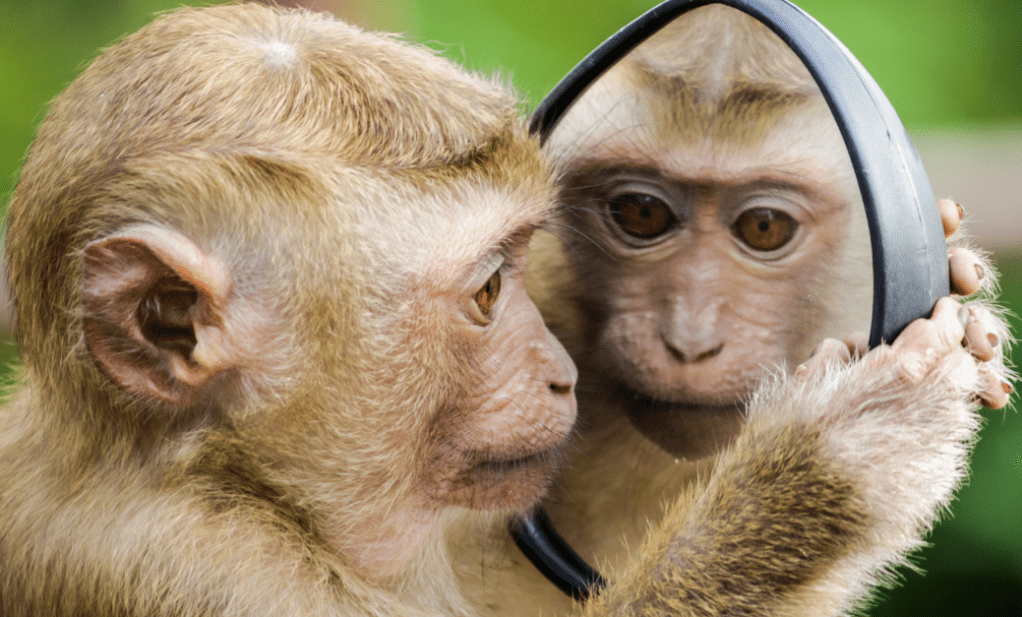
Dealing with Tradeoffs
Some reading this may scoff at the thought of compassion in our world today, immediately thinking of the people in their lives that constantly are in need of assistance, and those who never seem to be able to steady the ground beneath their feet.
Isn’t it bad to coddle someone?
Aren’t we just creating soft people by enabling them in this way?
Can’t compassion hurt some by creating a group of people who greedily feed on our good will without ever giving back?
These thoughts and questions, while definitely something to keep in mind, should be a small piece of this equation. Yes, there are people out there who need constant compassion and enabling, but we shouldn’t use them as the rule, instead as more of the exception. We can learn techniques that help us remove ourselves from a soul sucking situation, instead bringing in reinforcements that are equipped to help those of us having a hard time getting off the floor.
But even in regular situations, we have to become aware that showing compassion doesn’t always work out the way we would like it to: with perfect symbiosis.
These tradeoffs to showing compassion should not discourage us, they should instead allow us to create a better outline for moving forward; we should use them as a practice ground and a place to learn lessons. Take heed, reflect, and be honest with ourselves:
Why were we being compassionate? Was it to feed our own ego? Was it to feel better about asking for compassion in the future?
Did we try a wrong approach? Each of us looks at compassion differently, we need open communication to ensure that we are not just providing what works for us, but what will help the other person in the future.
Was compassion the right thing to do in this moment? Being compassionate when we are not in a place to offer it can do a disservice to others as well as to ourselves. Our patience may wane quickly if we are not balanced in our own world. We need to also practice being honest with ourselves and each other; explain gently but firmly when you are unable to provide compassion, then come back when you are able to give again.
Asking these questions helps us strengthen our compassion muscles.

Moving Forward
As we gain this strength, we can better assess when and how much compassion may be necessary within your relationships. When to push someone and when to coddle a bit. When to stop and take the time to provide someone else with the love they need, and when to explain that we are not in a place to do so. While this is a lot to take on, even starting small can really add a lot. In case you are a bit stumped, I thought I would share a few small examples of compassion that I have used with great success:
Being Kind to ourselves
Ignoring our own emotions in lieu of helping others adds unnecessary stress to our lives. We will inevitably experience those emotions regardless of how hard we pretend they do not exist, usually at a very inopportune time. It is important to experience our emotional reactions in a safe place and with those we trust in order to work through them productively. Self compassion is an important part of being able to effectively share compassion with others. Try to pick one point in each day to be kind internally: take a walk, meditate, practice mantras or other things that make you feel calm, content and centered.
Looking people in the eye

When you meet someone’s gaze, it shows that you are focused on paying attention to them. When we are distracted, looking away, fidgeting, the other person starts to feel like their words and actions mean little to us. That whatever has us distracted is much more important than communicating. Looking someone in the eye helps the people in our lives understand how important they are to us. When this is not possible, take a moment to explain why it is not and follow up once you have the time and capacity.
Saying “Thank You”
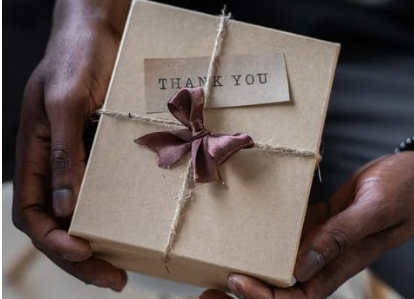
Showing gratitude helps us feel humble and feeling humble allows us to connect with others as our egos do not get in the way. Saying “Thank you”, even for something small, shows the other person that helping you was appreciated and very worth their time. Not only does this make them feel good, it also creates a stronger bond which adds to our longevity and overall happiness.

Asking “How are you” and really wanting to know the answer
Americans, especially, have a habit of using “how are you” as “hello” and only wanting a one-word answer. Think about how we feel when this happens to us, does it add to our happiness? Or does it take something (even a little bit) away? I argue it does the latter and have seen a lot of my relationships flourish because I took the time to really want to know how the other person was.
My hope is that slowly practicing these small traits will show one how good it can feel to show compassion, how a little bit goes a long way, and what help it can really be to our own lives. The more compassion we create in the world, the higher we can rise together.
Sincerely,
Jessica
Because deep inside, many of us desire to be better humans, but we do not quite know how…

Because we have wished on the moon, tried so many different things, and while we feel better for a little while, it doesn’t quite stick…
Because our hearts and our minds are telling lies to each other, and our souls are suffering for it…
Because we are overwhelmed with surface-level distractions, consistently pushed through the same old system leaving a level of muck that weighs heavy on us each day. Unresolved issues growing larger and deeper with each generation. Problems that reach back through history and seem unsolvable.
Over the centuries, people or groups in power, or strong and certain believers have tried to provide different templates for humans to use as an example of a “good life” : religious, political, commercial, spiritual, motivational, etc.
Each framework provides some of the answers, but often lead back to a similar agenda: To keep us living within the current status quo.
We can reject this way of thinking if only we have a few key ingredients:
*A courageous heart

*An individualized map. One that provides the information you need to walk the path right for you

*A guide. One who has studied, experimented, succeeded and failed. Someone to help you find your answers by sharing tools, information, anecdotes and best practices. Most of all, someone to listen.

That is why the Elements of Life© were created: to create a community of Explorers who reach the summit and find their way.
We will only find unity when each of us feel worthy and wanted
We will only feel worthy and wanted if we understand our meaning
We will only understand our meaning if we are guided towards the light
No matter where you start as an Explorer, our classes will provide you a deep level of insight into our ten basic elements of humanity and assist you in uncovering your path to harmony. These elements are what help us to reconcile with the confounding, overwhelming obviousness of life and create a solid core on which to build a fulfilling existence.

Thanks for joining me!
Good company in a journey makes the way seem shorter. — Izaak Walton

 Navigate our Complex World Successfully